 Skip to content
 Key Takeaways
- Identify the root cause of Fixing Container Door Problems before attempting any repair.
- Regular lubrication and hinge inspection prevent most common failures.
- Use corrosion‑resistant materials for seals and gaskets in harsh environments.
- Document every maintenance action to track recurring issues and improve future interventions.
- When structural deformation is present, consult a certified welder or container specialist.
Imagine a bustling port where a single stuck container door halts the loading schedule, causing costly demurrage fees and frustrated truck drivers. Fixing Container Door Problems is not just a maintenance task; it is a critical link in the supply chain that keeps goods moving efficiently. In the following sections, we will explore why doors fail, how to diagnose issues quickly, and the best practices for lasting repairs.
Understanding Container Door Mechanics

Container doors consist of two vertical panels, a series of hinges, locking rods, gaskets, and a handle mechanism. Each component must work in harmony to provide a weather‑tight seal. When any part corrodes, bends, or seizes, the door can become difficult to open or close.
Furthermore, the door’s cam locks engage with the container’s frame to secure the cargo during transit. Proper alignment of these cams is essential; misalignment leads to uneven pressure on the gasket and premature wear. Consequently, a thorough understanding of these mechanics is the first step toward effective troubleshooting.
Fixing Container Door Problems: A Step‑by‑Step Approach
Begin by isolating the door from the container frame to relieve tension on the hinges. Next, visually inspect each hinge for rust, cracks, or missing bolts. Then, operate the handle slowly while observing the movement of the locking rods. This systematic method helps pinpoint whether the issue lies in the hinges, rods, or seal.
In addition, check the gasket for signs of hardening, cracking, or compression set. A compromised gasket allows water ingress, which can accelerate corrosion of internal parts. Therefore, replacing the gasket is often a quick win that improves both sealing and ease of operation.
Moreover, lubricate all moving parts with a high‑quality, silicone‑based spray. Avoid petroleum‑based lubricants on rubber gaskets as they can cause swelling. As a result, the door will swing freely and the locking mechanism will engage smoothly.
Common Causes of Container Door Failure
One frequent culprit is corrosion caused by exposure to saltwater and humid climates. Rust builds up on hinge pins and locking rods, increasing friction and eventually seizing the mechanism. Another cause is impact damage from forklifts or shifting cargo during transit, which can bend the door frame or hinges.
Furthermore, improper stacking can exert uneven pressure on the door, leading to warping of the panels. Over time, this warping prevents the door from closing flush with the container body, compromising the seal. Consequently, regular inspection of stacking practices is vital for preventing structural deformation.
In addition, temperature extremes cause the metal to expand and contract, which can loosen bolts and create gaps in the sealing surface. Therefore, using materials with compatible thermal expansion coefficients reduces stress on the door assembly.
Moreover, neglecting routine maintenance allows small issues to snowball into major failures. A simple habit of wiping down the door after each use and applying a protective coating can extend service life significantly.
Diagnostic Procedures for Door Issues
Start with a visual walk‑around, noting any obvious deformation, rust, or missing hardware. Then, operate the door through its full range of motion while listening for grinding or clicking noises. These auditory clues often indicate worn hinge bearings or misaligned locking rods.
Furthermore, use a feeler gauge to measure the gap between the door panel and the container frame at multiple points. Consistent gaps suggest proper alignment, whereas varying gaps point to twisting or bowing of the door. Consequently, recording these measurements creates a baseline for future comparisons.
In addition, perform a water spray test by gently misting the door seam and observing for leaks. This test reveals gasket effectiveness and highlights areas where sealant may have degraded. As a result, you can target specific sections for gasket replacement rather than replacing the entire seal.
Moreover, check the torque on all hinge bolts using a calibrated wrench. Over‑tightened bolts can strip threads, while under‑tightened bolts allow movement that accelerates wear. Therefore, adhering to the manufacturer’s torque specifications ensures optimal fastener performance.
Tools and Materials Needed for Repair
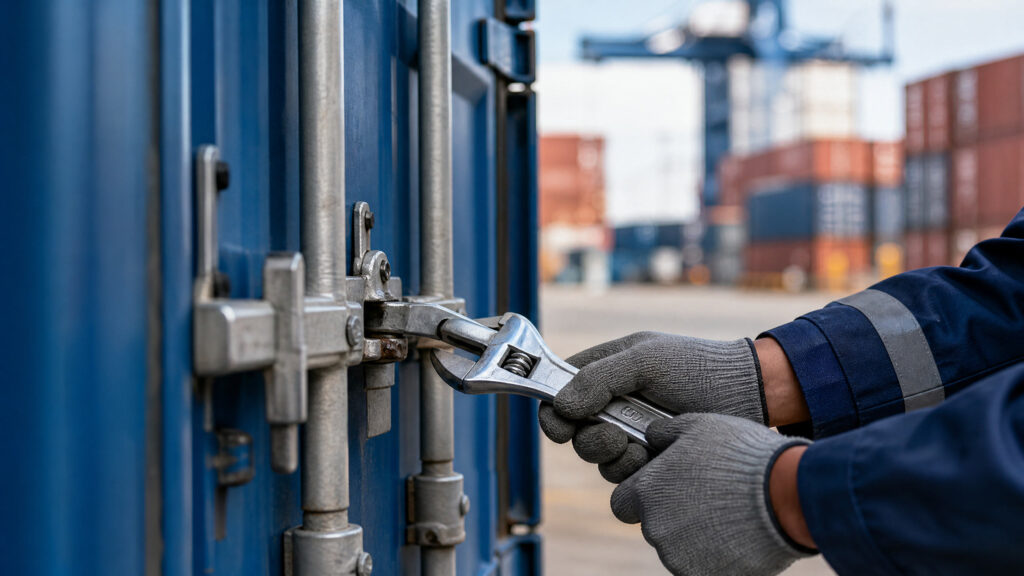
A basic toolkit for Fixing Container Door Problems includes a set of metric wrenches, a socket set, a rubber mallet, and a torque wrench. Having a portable grinder or wire brush on hand speeds up rust removal. Additionally, a heat gun can assist in loosening seized bolts without damaging surrounding metal.
Furthermore, stock silicone‑based lubricant, marine‑grade anti‑corrosion spray, and replacement gaskets made from EPDM or neoprene. These materials resist UV degradation and maintain flexibility across a wide temperature range. Consequently, using the correct supplies reduces the likelihood of repeat failures.
In addition, keep a supply of stainless‑steel hinge pins and locking rods, as they offer superior resistance to corrosion compared to standard carbon steel. If the door frame shows minor dents, a body‑filler kit designed for metal can restore the surface before repainting. Therefore, being prepared with the right parts minimizes downtime.
Moreover, personal protective equipment such as gloves, safety glasses, and hearing protection is essential when grinding or using power tools. Safety should never be compromised in the pursuit of a quick fix.
Step‑by‑Step Repair Guide
First, secure the container on level ground and engage the parking brakes to prevent movement. Next, remove the door handle assembly by unscrewing the retaining bolts; keep the hardware organized for reinstallation. Then, gently tap the hinge pins upward with a rubber mallet to release the door from the frame.
Furthermore, inspect each hinge pin for wear; replace any pin that shows scoring or deformation. Clean the hinge barrels with a wire brush and apply a thin layer of anti‑corrosion spray before reinserting the pins. Consequently, the hinges will move smoothly and resist future rust.
In addition, examine the locking rods for straightness; a bent rod can prevent the cam from engaging fully. Straighten minor bends using a vise and a pipe extender, or replace the rod if the damage is severe. As a result, the locking mechanism will achieve proper tension and seal integrity.
Moreover, remove the old gasket carefully, preserving the mounting channel. Clean the channel with a solvent to eliminate old adhesive residue, then press the new gasket into place, ensuring it sits evenly without twists. Therefore, the door will close with a uniform compression seal.
Finally, reattach the door to the frame, reinstall the handle, and torque all bolts to the manufacturer’s specifications. Operate the door several times to distribute lubricant evenly and verify smooth movement. Consequently, the repair is complete and ready for service.
Preventive Maintenance Practices
Establish a monthly inspection schedule that includes visual checks, lubrication, and fastener torque verification. During each inspection, document any anomalies in a maintenance log; this record helps identify trends and predict future failures. Furthermore, rotate the door panels periodically if the container design allows, to distribute wear evenly across hinges.
In addition, apply a protective wax or polymer coating to the exterior door surface every six months. This coating acts as a barrier against salt spray and UV radiation, thereby reducing corrosion rates. Consequently, the door’s appearance and functional lifespan are both extended.
Moreover, train warehouse personnel on proper door operation techniques, emphasizing gentle handling of the handle and avoiding slamming the door shut. Educating staff reduces accidental impact damage and promotes a culture of care. Therefore, human error becomes a less frequent contributor to door problems.
Finally, consider installing sacrificial anodes on the container’s exterior near the door area in highly corrosive environments. These anodes corrode preferentially, protecting the underlying steel. As a result, the overall corrosion protection strategy becomes more robust.
When to Call a Professional
If the door frame exhibits significant bending, cracking, or weld failure, professional intervention is required. Attempting to straighten major structural damage without proper equipment can compromise the container’s integrity and safety. Furthermore, if locking mechanisms repeatedly fail despite correct alignment and lubrication, internal wear may necessitate replacement of the entire latch assembly.
In addition, when corrosion has penetrated the metal to a depth that affects load‑bearing capacity, a certified welder should assess and repair the damage using appropriate filler materials. Consequently, the container remains compliant with international shipping standards.
Moreover, if you lack the necessary tools, such as a torque wrench calibrated to the container manufacturer’s specifications, it is safer to outsource the task. Professional technicians also have access to specialized sealants and gaskets that may not be readily available to the average maintenance crew. Therefore, leveraging expertise ensures a lasting repair and reduces liability.
Case Study: Successful Door Rehabilitation at a Major Port
At a busy Asian terminal, operators reported a 15% increase in dwell time due to recurring container door jams. A maintenance team conducted a root‑cause analysis and discovered that salt‑laden air had caused extensive corrosion on the hinge pins of containers stored near the waterfront. Consequently, they launched a targeted intervention program.
Furthermore, the team replaced all corroded hinge pins with stainless‑steel equivalents, applied a marine‑grade anti‑corrosion coating to the hinge barrels, and instituted a bi‑weekly lubrication schedule using silicone‑based spray. As a result, door operation time decreased from an average of 45 seconds to under 10 seconds per container.
In addition, they replaced aging EPDM gaskets with neoprene versions that offered better resistance to UV degradation. The improved sealing eliminated water ingress incidents, which had previously caused cargo damage claims. Therefore, the terminal saw a reduction in both operational delays and insurance premiums.
Moreover, the maintenance team trained shift supervisors to perform quick visual checks before each loading cycle, fostering proactive detection of emerging issues. Consequently, the overall reliability of container doors improved by 40% over six months, validating the effectiveness of the combined preventive and corrective strategy.
Future Trends in Container Door Technology
Manufacturers are experimenting with composite door panels that combine fiberglass reinforcement with a polymer core, offering high strength while being immune to rust. These panels also provide better insulation, reducing condensation inside the container. Consequently, the need for frequent corrosion‑related maintenance may diminish.
Furthermore, smart locking systems equipped with RFID sensors are being piloted to monitor door status in real time. Alerts are sent to logistics software when a door is opened unauthorized or fails to seal properly. As a result, security and maintenance teams can respond instantly, reducing losses and downtime.
In addition, self‑lubricating hinge bearings made from PTFE‑infused bronze are entering the market, eliminating the need for regular greasing. These bearings maintain low friction across wide temperature ranges, thereby extending service intervals. Therefore, adopting such innovations can lead to significant cost savings over the container’s lifespan.
Moreover, modular door designs that allow quick panel replacement are gaining traction among leasing companies. When a panel sustains damage, only the affected section is swapped out, minimizing repair time and parts inventory. Consequently, the industry moves toward greater sustainability and operational agility.
Conclusion
Effectively Fixing Container Door Problems hinges on a systematic approach that combines accurate diagnosis, appropriate tooling, quality materials, and consistent preventive care. By understanding the underlying mechanics, addressing corrosion promptly, and embracing emerging technologies, operators can keep container doors functioning reliably.
Furthermore, investing in training and documentation creates a knowledge base that reduces repeat failures and empowers maintenance teams to act swiftly. Consequently, the supply chain experiences fewer interruptions, lower costs, and improved customer satisfaction.
In addition, staying informed about industry advancements ensures that your maintenance strategy evolves alongside the equipment you manage. Therefore, treat each door service opportunity as a chance to enhance overall container performance and protect the valuable cargo within.
What are the first signs that a container door needs repair?
The earliest indicators include difficulty turning the handle, visible rust on hinge pins, unusual grinding noises during operation, and water stains inside the container after rain. Noticing any of these symptoms warrants immediate inspection to prevent further deterioration.
How often should lubrication be performed on container door hinges?
Under normal operating conditions, lubricate the hinges every 30 to 45 days. In high‑salinity or extreme temperature environments, shorten the interval to every two weeks. Always use a silicone‑based lubricant to avoid damaging rubber gaskets.
Can I replace a container door gasket myself, or do I need a specialist?
Yes, replacing a gasket is a straightforward task that most maintenance crews can perform. Ensure you have the correct size and material (EPDM or neoprene), clean the mounting channel thoroughly, and press the new gasket evenly into place without twists or stretches.
What tools are essential for fixing severe corrosion on container door hinges?
Essential tools include a wire brush or angle grinder for rust removal, a torque wrench for proper reassembly, a rubber mallet to drive pins, and a heat gun for loosening seized bolts. Personal protective equipment such as gloves and safety glasses is also mandatory.
When should I consider replacing the entire container door instead of repairing it?
Consider full replacement when the door frame exhibits structural cracks, significant bending that affects alignment, or when repair costs exceed 60% of a new door’s price. Additionally, if repeated failures persist despite corrective actions, a new door may be more economical.
