 Skip to content
 One trip Vs Cargo worthy Containers: Decoding the Best Choice for Your Shipping Needs
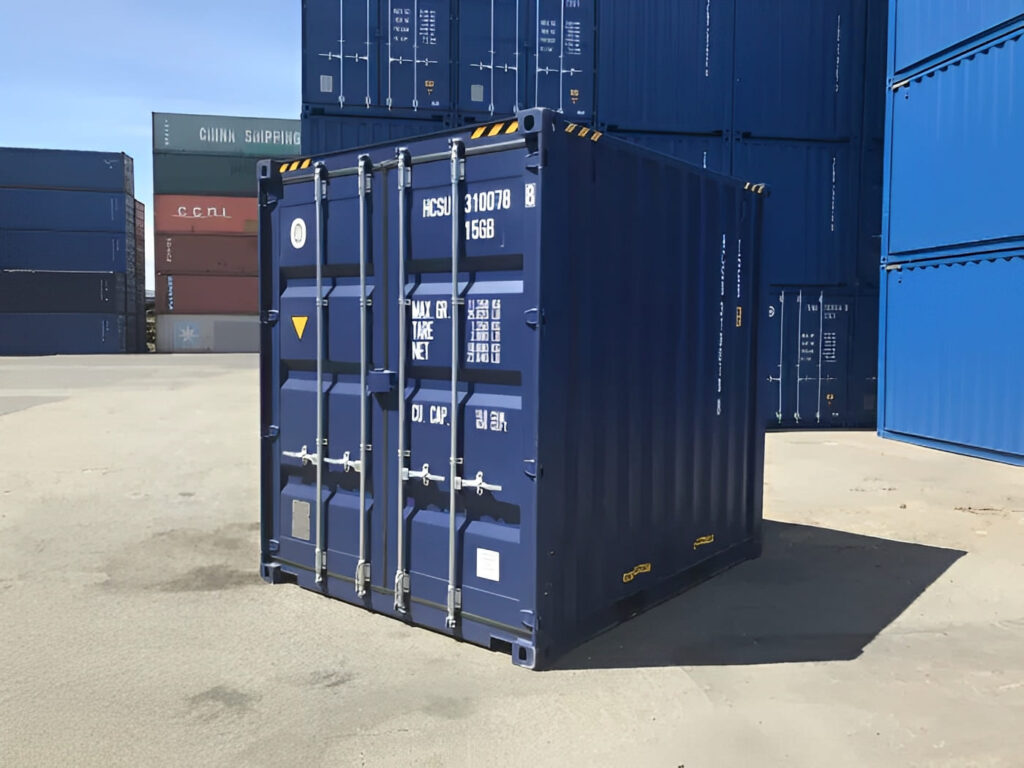
When businesses evaluate storage and transport solutions, the decision often boils down to One-trip Vs Cargo-worthy Containers. This comparison directly impacts cost, durability, and suitability for specific logistics chains. In the following sections, we break down each container grade, highlight key performance indicators, and provide actionable guidance to help you select the optimal option for your operation.
Key Takeaways
- One-trip Vs Cargo-worthy Containers differ primarily in usage history and structural integrity.
- One-trip containers have made only a single journey, often retaining near‑new condition.
- Cargo‑worthy containers meet IICL standards for repeated shipping cycles.
- Cost savings with one‑trip units can be significant for static storage, while cargo‑worthy units excel in active shipping.
- Always verify certification, inspect for corrosion, and consider future resale value before purchase.
One-trip Vs Cargo-worthy Containers: Core Differences Explained
Understanding the fundamental distinction between these two classifications begins with their lifecycle. A One-trip Vs Cargo-worthy Containers unit that has completed just one voyage typically shows minimal wear, preserving the original factory finish and structural integrity. Conversely, a cargo‑worthy unit has endured multiple trips, yet it still satisfies the stringent IICL (Institute of International Container Lessors) criteria for continued service.
This difference translates into practical implications for buyers. If you need a container for long‑term static storage, a one‑trip option may provide near‑new aesthetics at a lower price point. For active shipping lines that require repeated loading, unloading, and stacking, a cargo‑worthy container offers proven resilience and compliance with international standards.
Another key factor is the warranty and resale market. One‑trip containers often carry a longer remaining warranty because they have suffered less fatigue. Cargo‑worthy containers, while still valuable, may have a shorter warranty window but enjoy a robust secondary market due to their proven track record in global trade.
One-trip Vs Cargo-worthy Containers: Which Is Right for You?
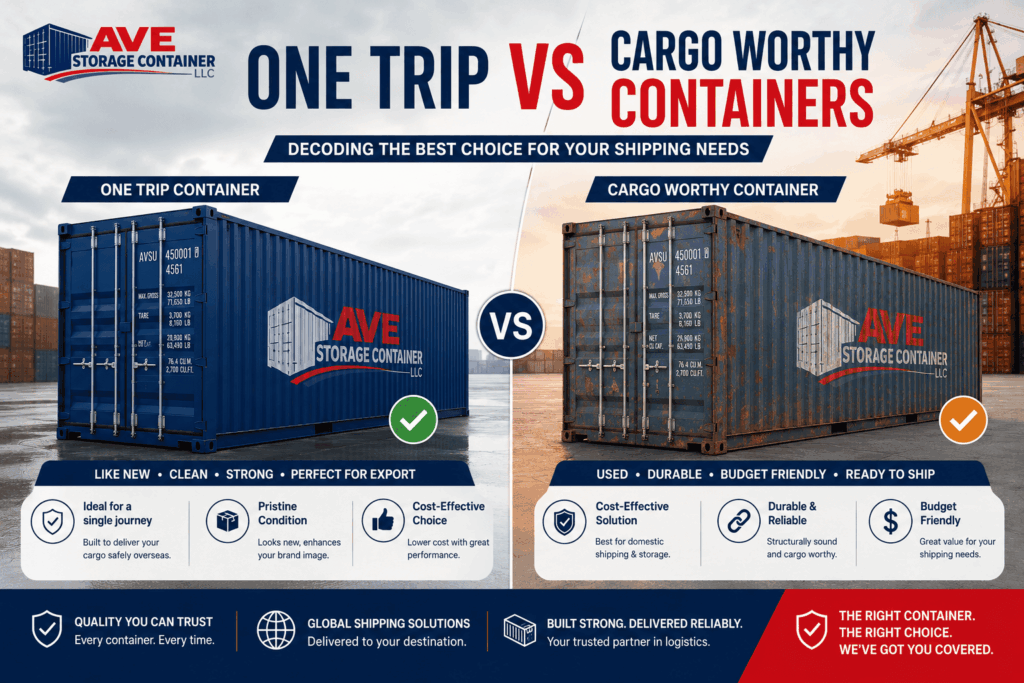
Choosing between these two grades hinges on your operational priorities. Begin by assessing the intended use: will the container remain stationary, or will it be subjected to frequent handling? If the answer leans toward storage, a One-trip Vs Cargo-worthy Containers unit offers a cost‑effective solution with minimal refurbishment needs.
For businesses that rely on intermodal transport, the cargo‑worthy classification ensures that the container can withstand the stresses of multiple voyages without compromising safety. In such scenarios, investing in a cargo‑worthy unit reduces the risk of unexpected structural failures during transit.
Budget considerations also play a role. One‑trip containers generally command a premium of 10‑20 % over used cargo‑worthy units of similar size, reflecting their near‑new condition. However, when amortized over a multi‑year lifespan, the total cost of ownership may favor cargo‑worthy containers if they are deployed intensively.
Understanding One-trip Containers
One‑trip containers are manufactured to ISO specifications and then shipped loaded with cargo to their destination. After unloading, they are typically sold directly from the port or depot without undergoing additional reconditioning. This limited exposure to handling means that the corrugated steel walls, flooring, and door seals retain much of their original strength.
Inspectors often note that one‑trip units show little to no rust, minimal denting, and intact gaskets. Because they have not been subjected to the repetitive stresses of stacking and lashing, the likelihood of hidden fatigue cracks is markedly lower.
From a sustainability perspective, purchasing a one‑trip container can be viewed as extending the life of a newly built asset, thereby delaying the need for new steel production and reducing the associated carbon footprint.
Understanding Cargo-worthy Containers
Cargo‑worthy containers have completed at least one shipping cycle and have undergone a rigorous inspection to confirm they meet IICL standards. These standards cover aspects such as wall thickness, door operation, floor condition, and the absence of hazardous damage. A container that passes this inspection receives a cargo‑worthy label, signifying it is fit for continued international transport.
The inspection process includes checking for corrosion, verifying that the CSC (Container Safety Convention) plate is legible and valid, and ensuring that the locking mechanisms function correctly. Any defects identified during the survey must be repaired before the container can be deemed cargo‑worthy.
Because they have already proven their durability in real‑world conditions, cargo‑worthy containers are often preferred by shipping lines that require predictable performance across multiple voyages.
Cost Implications
When evaluating the financial side of One-trip Vs Cargo-worthy Containers, consider both acquisition price and ongoing expenses. One‑trip units typically have a higher upfront cost due to their limited usage, but they may incur lower maintenance expenses in the initial years of ownership.
Cargo‑worthy containers, while cheaper to acquire, might require more frequent inspections and potential repairs, especially if they have been exposed to harsh environments. However, their extensive service history often means that any latent issues have already been identified and addressed.
It is also prudent to factor in resale value. One‑trip containers tend to retain a higher percentage of their original price when sold after a few years of static use, whereas cargo‑worthy units depreciate more steadily but enjoy a liquid market due to their proven reliability.
Industry Standards and Certifications
The container grading system relies heavily on internationally recognized benchmarks. The IICL defines five grades: New, Cargo Worthy, Wind and Watertight, As Is, and Scrap. Understanding where One-trip Vs Cargo-worthy Containers fit within this hierarchy clarifies their respective suitability.
One‑trip containers, although not formally graded by IICL, are often considered synonymous with “New” or “Near New” because they have not yet entered the repetitive cargo cycle. Their condition usually exceeds the minimum thresholds for Cargo Worthy classification.
Cargo‑worthy containers, by definition, satisfy the IICL’s Cargo Worthy criteria, which include limits on corrosion, permissible dent depth, and functional door seals. Containers that fall short of these thresholds are relegated to lower grades such as Wind and Watertight or As Is.
Additionally, many national customs administrations require a valid CSC plate for containers used in international trade. Both one‑trip and cargo‑worthy units must display a legible CSC plate; however, the plate’s expiration date may differ based on the container’s age and usage history.
Pros and Cons of Each Type
To simplify the decision‑making process, we outline the advantages and disadvantages associated with each classification.
Advantages of One-trip Containers
- Near‑new appearance and structural integrity.
- Lower immediate maintenance requirements.
- Higher resale value for static storage applications.
- Often come with remaining manufacturer warranty.
Disadvantages of One-trip Containers
- Higher initial purchase price.
- Limited availability in certain geographic markets.
- May be over‑specified for low‑intensity storage needs.
Advantages of Cargo-worthy Containers
- Proven performance in repeated shipping cycles.
- Wider availability and competitive pricing.
- Strong secondary market ensures easy resale.
- Meets explicit IICL standards for international transport.
Disadvantages of Cargo-worthy Containers
- Greater likelihood of wear‑related issues such as corrosion or floor fatigue.
- May require more frequent inspections and repairs.
- Shorter remaining warranty compared to one‑trip units.
Real-world Applications and Case Studies
Examining practical examples helps illustrate where each container type excels.
Case Study: Retail Warehouse Storage
A mid‑sized retailer needed 50 × 40‑foot containers for seasonal inventory overflow. After evaluating costs, they selected one‑trip units because the containers would remain stationary for 18 months, minimizing handling. The near‑new condition reduced the need for interior lining modifications, and the retailer reported a 12 % reduction in damage‑related losses compared to using older cargo‑worthy units.
Case Study: International Freight Forwarder
A global freight forwarder required 200 containers for a new trade lane linking Asia to Europe. They opted for cargo‑worthy containers after confirming IICL compliance. Over the first year, the forwarder logged zero structural failures attributable to container defects, attributing this reliability to the rigorous pre‑service inspection each unit received.
Case Study: Modular Housing Project
A nonprofit organization pursued affordable housing using repurposed containers. They chose cargo‑worthy units because the design involved cutting openings for windows and doors, a process that benefits from the proven ductility of steel that has already undergone stress relief during prior voyages. The project stayed within budget and passed local building inspections without additional reinforcement.
How to Inspect and Choose the Right Container
Whether you lean toward a One-trip Vs Cargo-worthy Containers unit, a systematic inspection process is essential.
- Verify the CSC plate: Ensure it is legible, not expired, and matches the container’s identification number.
- Examine the exterior: Look for signs of corrosion, excessive denting, or damage to the corner castings.
- Inspect the doors: Confirm that gaskets are intact, hinges operate smoothly, and locking rods engage fully.
- Check the floor: For wooden flooring, assess for rot, insect damage, or loosened panels; for steel flooring, look for pitting or deformation.
- Review the interior: Ensure there are no hazardous residues, and that the interior paint is sound if you plan to store sensitive goods.
- Request documentation: Ask for survey reports, repair logs, and any warranty certificates.
- Consider a third‑party inspection: Engaging a certified marine surveyor can provide an unbiased assessment of condition and compliance.
Future Trends in Container Grading
The container market continues to evolve, driven by sustainability initiatives, technological advancements, and shifting trade patterns.
Digital Tracking and Condition Monitoring
IoT sensors now enable real‑time monitoring of temperature, humidity, shock, and location. This data can inform grading decisions by providing objective evidence of a container’s exposure history, potentially refining the One-trip Vs Cargo-worthy Containers distinction beyond simple voyage counts.
Eco‑friendly Refurbishment
Companies are investing in greener repair techniques, such as using low‑VOC coatings and recycling steel scrap. As refurbishment standards rise, the line between one‑trip and cargo‑worthy containers may blur, with more units achieving “like‑new” status after eco‑conscious repairs.
Regulatory Shifts
International bodies are reviewing the CSC and IICL standards to accommodate newer container designs, including hybrid steel‑composite units. Staying informed about these updates will help buyers anticipate changes in grading criteria and adjust procurement strategies accordingly.
Ready to Optimize Your Container Investment?
Whether you need a pristine one‑trip unit for secure storage or a battle‑tested cargo‑worthy container for active shipping, our experts can guide you to the perfect fit.
FAQs:
What does one‑trip mean in container grading?
A one‑trip container has completed exactly one loaded voyage from the manufacturer’s facility to its destination port. After unloading, it is typically sold without undergoing significant reconditioning, preserving near‑new condition and structural integrity.
How does a container earn the cargo‑worthy designation?
To be classified as cargo‑worthy, a container must pass an IICL inspection that verifies compliance with standards for wall thickness, door operation, floor condition, and absence of hazardous damage. The container receives a valid CSC plate and is deemed fit for repeated international shipping cycles.
Which container type is more cost‑effective for long‑term static storage?
Generally, one‑trip containers offer better value for static storage because they exhibit minimal wear, require less immediate maintenance, and often retain higher resale value after several years of stationary use.
Can a cargo‑worthy container be upgraded to a one‑trip status?
No. The one‑trip label reflects the actual usage history—specifically, that the container has made only a single voyage. Once a container has undertaken additional trips, it cannot revert to a one‑trip classification, regardless of any refurbishment performed.
Are there insurance differences between one‑trip and cargo‑worthy containers?
Insurance premiums may vary based on perceived risk. One‑trip containers, owing to their lower wear and tear, sometimes attract slightly lower premiums for storage‑only policies. Cargo‑worthy units, while still insurable, may incur higher rates if used in high‑risk trade lanes due to their exposure history.
