 Skip to content
 40ft High Cube Vs Standard Containers: Choosing the Right Shipping Solution for Your Cargo
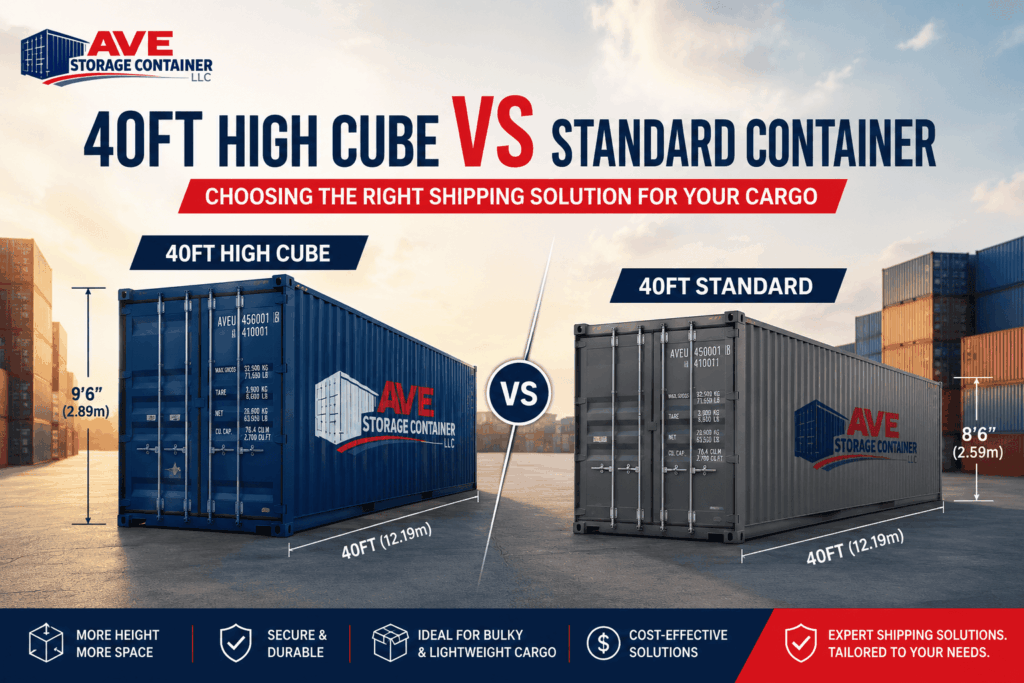
40ft High Cube Vs Standard Containers are critical comparison for shippers seeking optimal cargo capacity and cost efficiency. When you need to move large volumes of goods internationally, understanding the dimensional differences between these two container types can save time and money. This article breaks down every aspect of the 40ft High Cube Vs Standard Container debate, from internal volume to handling considerations, so you can make an informed decision.
Key Takeaways:
- The 40ft High Cube offers an extra foot of height compared to the standard 40ft container.
- Internal volume increases from approximately 67.7 cubic meters to 76.3 cubic meters.
- Cost differences are usually modest, but the high cube can reduce the number of shipments needed.
- Handling equipment compatibility is generally the same, though some older cranes may have height restrictions.
- Choosing between them depends on cargo nature, stacking requirements, and destination regulations.
40ft High Cube Vs Standard Container
A standard 40ft container, often called a 40ft dry van, measures 40 feet in length, 8 feet in width, and 8 feet 6 inches in height externally. Internally, it provides roughly 2.35 meters in width, 2.39 meters in length, and 2.39 meters in height, yielding about 67.7 cubic meters of cargo space. This size has been the workhorse of global trade for decades.
In contrast, a 40ft high cube container retains the same length and width but adds an extra foot to the height, making it 9 feet 6 inches tall externally and approximately 2.69 meters tall internally. This yields an internal volume of around 76.3 cubic meters. The additional height translates to roughly 12.6 % more space without changing the footprint.
When comparing 40ft High Cube Vs Standard Container, shippers often focus on the volume gain because it can mean fewer containers for the same cargo weight. For lightweight, bulky items such as furniture, textiles, or foam products, the high cube can be a game‑changer. Conversely, for dense goods like machinery or metal parts, the standard container may still be sufficient.
Furthermore, the external dimensions of both container types remain identical in length and width, which means they fit on the same chassis, stack in the same cell guides, and are handled by the same lifting equipment in most modern terminals. This interchangeability simplifies logistics planning.
However, it is important to note that some older port cranes or warehouse doors may have height restrictions that prevent a 9 ft 6 in container from being accommodated. In such cases, the standard 8 ft 6 in container remains the safer choice.
40ft High Cube Vs Standard Container: Key Differences
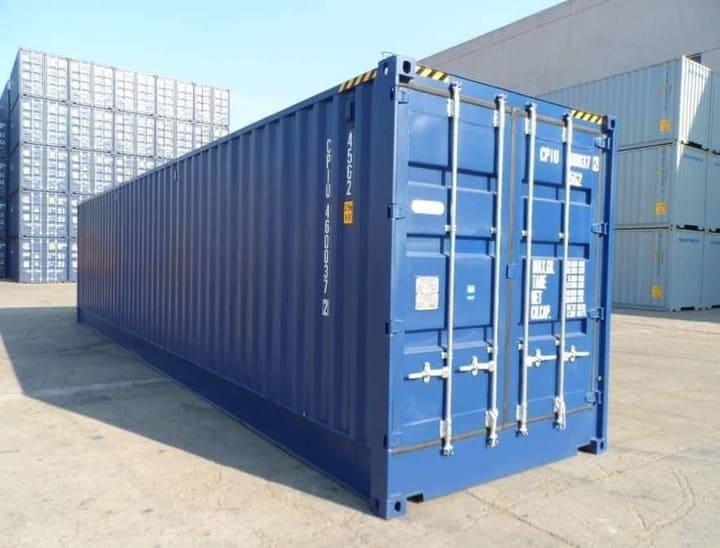
The primary distinction lies in internal height: standard containers offer 2.39 m, while high cube containers provide 2.69 m. This extra 0.30 m may seem modest, but when multiplied across the floor area (approximately 2.35 m × 12.03 m), it yields the additional 8.6 m³ of volume.
Another difference is the tare weight. A typical 40ft high cube container weighs about 300 kg more than its standard counterpart due to the extra steel required for the taller walls. This slight increase in tare weight can affect payload calculations, especially when operating near weight limits on roads or rails.
Regarding door opening, both types usually feature the same double‑door design with a width of 2.34 m and a height of 2.28 m for the standard container, while the high cube maintains the same door height because the extra space is located above the door frame. Consequently, loading and unloading procedures remain unchanged.
In terms of cost, leasing or purchasing a 40ft high cube container typically incurs a premium of 5 % to 10 % over a standard unit. This premium reflects the additional material and manufacturing complexity. Nevertheless, many shippers find the premium justified when the extra volume reduces the total number of containers needed for a shipment.
Finally, the ISO specifications differentiate the two: standard 40ft containers are classified under ISO 668:1 Series 1, while high cube versions fall under ISO 668:2 Series 2. Both sets of standards guarantee interoperability across global shipping lines, ports, and inland transport networks.
Applications and Use Cases
The extra height of a 40ft high cube container makes it ideal for voluminous, low‑density cargo. Examples include baled cotton, rolled carpets, lightweight machinery parts packed in crates, and consumer goods such as televisions or bicycles that are shipped in their retail packaging.
Industries that frequently benefit from high cube containers are automotive (for shipping assembled seats or interior panels), furniture (for flat‑pack sofas and wardrobes), and textiles (for bulk fabric rolls). In these sectors, the ability to stack goods higher inside the container reduces the number of shipments required to move the same volume.
Conversely, standard 40ft containers remain the preferred choice for dense commodities like steel coils, bags of cement, or palletized bottled water. When the cargo weight reaches the container’s maximum payload before filling the available volume, the extra height offers little advantage.
Some shippers adopt a mixed strategy, using standard containers for heavy loads and high cube containers for light, bulky loads within the same shipment plan. This approach optimizes both weight utilization and cubic capacity.
Furthermore, certain specialized cargo, such as oversized machinery that exceeds standard height but can be disassembled, may still fit in a high cube container after reassembly, avoiding the need for open‑top or flat‑rack solutions.
Cost Implications
The acquisition cost difference between a 40ft high cube and a standard container is relatively small when amortized over the container’s lifespan. Leasing rates typically show a higher cube premium of about USD 2‑4 per day per unit, depending on the region and supplier.
From a transportation perspective, the additional tare weight of the high cube can slightly increase fuel consumption on road legs, especially when the container is not fully loaded. However, this impact is often offset by the reduction in the number of trips required to move the same volume of cargo.
Port handling charges are generally based on container size rather than height, so both container types incur the same stevedoring and storage fees. Some terminals may apply a slight surcharge for high cube units if they require special stacking arrangements, but this practice is uncommon in major hubs.
Insurance premiums are usually calculated on the declared value of the cargo, not the container type, so there is no direct cost difference there. Nevertheless, the reduced number of containers needed for a given shipment can lower overall insurance exposure.
When conducting a total cost of ownership analysis, many logistics managers find that the high cube option yields a lower cost per cubic meter shipped, particularly for routes with high freight rates where container scarcity drives prices up.
Structural Differences
Both container types are constructed from corrugated steel panels with a Corten‑steel core for corrosion resistance. The high cube version incorporates additional vertical stiffeners to support the increased height, which slightly alters the panel layout but retains the same overall strength rating.
The floor construction remains identical, featuring a marine‑grade plywood or bamboo surface over steel cross members. This ensures that forklift pallet jacks and other ground handling equipment operate smoothly in either container type.
Corner castings on both models conform to ISO 1161 standards, allowing them to be locked onto twistlocks and stacking cones without modification. This uniformity is crucial for intermodal operations where containers are transferred between ship, rail, and truck.
Ventilation provisions are also similar; both types typically include two passive vents near the top of the side walls. The high cube’s extra height does not affect the vent placement, maintaining consistent airflow characteristics.
Finally, the door locking mechanisms, including lock rods and handle assemblies, are interchangeable between standard and high cube units, simplifying spare parts inventory for leasing companies and operators.
Handling and Transportation Considerations
Modern container handling equipment, such as reach stackers, rubber‑tyred gantry cranes, and ship‑to‑shore cranes, is designed to accommodate the full range of ISO container heights, including high cube models. As a result, most terminals process both container types without any operational adjustments.
In contrast, some older facilities, particularly those with low‑clearance warehouse doors or legacy gantry cranes, may impose height limits that exclude 9 ft 6 in containers. Shippers serving such locations must verify equipment specifications beforehand to avoid surcharges or delays.
When it comes to road transport, legal height restrictions vary by country. In the United States, the maximum allowable vehicle height is generally 13 ft 6 in, which permits a tractor‑trailer carrying a 40ft high cube container (overall height approx. 13 ft 6 in) to travel on most highways without a permit. In regions with lower limits, special routing or permits may be necessary.
Rail transport also accommodates high cube containers on most standard gauge lines, though certain tunnels or bridges with restricted clearance may require route planning. Intermodal terminals typically have gantry cranes capable of lifting the tallest ISO containers, ensuring smooth transfers.
Furthermore, the stacking strength of high cube containers is tested to the same ISO standards as standard units, meaning they can be safely stacked six or seven high on a vessel, depending on the ship’s design and cargo weight distribution.
Regulatory and Compliance Aspects
Both container types must comply with the International Convention for Safe Containers (CSC), which mandates periodic safety inspections and the display of a valid safety approval plate. The inspection criteria do not differentiate between standard and high cube containers, focusing instead on structural integrity, door functionality, and flooring condition.
Customs authorities treat the two container types identically for tariff classification and valuation purposes. The HS code for “shipping containers” applies regardless of height, simplifying documentation.
Environmental regulations, such as those governing the transport of hazardous materials, also apply equally. The additional internal volume of a high cube container does not change the classification rules for dangerous goods, though shippers must ensure that the increased capacity does not lead to over‑filling beyond permitted limits.
In some jurisdictions, local road safety laws impose maximum cargo height limits for vehicles on public roads. When a high cube container is loaded to its maximum internal height, the overall vehicle height may approach or exceed these limits, necessitating careful load planning.
Finally, insurance policies often reference the CSC plate as proof of seaworthiness. As long as the plate is valid, the container’s height does not affect coverage terms.
Environmental Impact
From a sustainability standpoint, the high cube container offers a modest advantage because it can reduce the number of containers required to move a given volume of cargo. Fewer containers mean less steel production, lower manufacturing emissions, and reduced energy consumption during container maintenance cycles.
Life‑cycle assessments show that the extra steel needed for the increased height adds roughly 15 kg of CO₂‑equivalent emissions per container over its lifetime. This increase is typically offset by the savings achieved when a shipper can eliminate one container from a shipment of bulky goods.
Moreover, the intermodal nature of container transport already promotes fuel efficiency compared to break‑bulk shipping. By maximizing cube utilization, high cube containers further enhance this efficiency, contributing to lower overall greenhouse‑gas emissions per ton‑kilometer moved.
Recycling practices for steel containers are identical for both types; at the end of their service life, the panels are melted down and reformed into new steel products, minimizing waste.
Some carriers offer “green container” programs that incentivize the use of high cube units for specific trade lanes, recognizing their role in improving load factor and reducing empty mileage.
Future Trends
The container industry continues to experiment with dimensions beyond the traditional 40ft length. While 45ft and 48ft containers gain traction in certain trades, the 40ft high cube remains a staple due to its compatibility with existing infrastructure.
Advances in lightweight alloys and high‑tensile steels may eventually allow manufacturers to produce taller containers without a significant weight penalty, potentially narrowing the cost gap between standard and high cube models.
Digital tracking and IoT sensors are being installed in both container types to monitor temperature, humidity, and shock. The additional internal volume of a high cube container provides more space for sensor placement, improving data granularity for sensitive cargo.
Furthermore, the rise of e‑commerce has increased demand for parcels that benefit from extra height, such as packaged home appliances and multi‑layered goods. This trend is expected to sustain the relevance of the 40ft high cube container for the foreseeable.
Finally, regulatory bodies are reviewing maximum vehicle height limits in response to evolving truck designs. Should those limits increase, the high cube container could see even broader adoption without requiring special permits.
Making the Decision: Which Container Is Right for You?
Choosing between a 40ft High Cube Vs Standard Cont begins with a clear assessment of your cargo’s physical characteristics. Measure the tallest item in your shipment; if it exceeds 2.39 m, a high cube container is likely necessary.
Next, evaluate the weight‑to‑volume ratio. For dense goods where weight limits are reached before filling the container, the standard option may be more economical despite the lower volume.
Consider the destination’s infrastructure. If the receiving warehouse or distribution center has low door clearance, verify that a high cube container can be accommodated; otherwise, plan for transloading to a standard unit at an inland terminal.
Analyze the cost trade‑offs. Request quotes for both container types from your leasing provider, factoring in any potential surcharges for height‑restricted routes. Calculate the cost per cubic meter shipped to see which option delivers better value.
Finally, run a trial shipment. Move a small volume of your product in both container types, record loading times, damage rates, and total logistics costs. Use the empirical data to inform your long‑term container strategy.
By following these steps, you can confidently select the container type that optimizes cost, safety, and efficiency for your specific supply chain needs.
Conclusion
The comparison of 40ft High Cube Vs Standard Container reveals that the primary advantage of the high cube lies in its additional internal height, which translates to roughly 12.6 % more cargo space without altering the container’s footprint. This extra volume can significantly reduce the number of shipments required for lightweight, bulky goods, leading to lower transportation costs and a smaller environmental footprint.
However, the standard 40ft container remains indispensable for heavy, dense cargo where weight limits are the constraining factor. Its slightly lower tare weight and widespread compatibility with older infrastructure make it a safe choice in many scenarios.
Ultimately, the decision hinges on a careful analysis of cargo dimensions, weight profiles, route restrictions, and total cost of ownership. By understanding the nuances outlined in this article, shippers can leverage the right container type to enhance supply chain performance while maintaining compliance and safety.
FAQs:
What is the main difference between a 40ft high cube container and a standard 40ft container?
The main difference is internal height: a standard 40ft container offers approximately 2.39 m of internal height, while a 40ft high cube provides about 2.69 m. This extra 0.30 m increases the internal volume from roughly 67.7 m³ to 76.3 m³, giving the high cube about 12.6 % more space for cargo.
Does a 40ft high cube container cost more to lease or purchase than a standard container?
Yes, a 40ft high cube typically carries a premium of 5 % to 10 % over a standard container due to the additional steel required for the taller walls. In leasing markets, the daily rate may be higher by a few dollars, but many shippers find the extra volume offsets this cost by reducing the number of containers needed.
Are there any height restrictions that could prevent using a 40ft high cube container?
Some older warehouse doors, low‑clearance bridges, or legacy port cranes may impose height limits below 9 ft 6 in (2.9 m). In such cases, a standard 8 ft 6 in container is required. Shippers should verify route and facility specifications before committing to high cube units for inland legs.
How does the extra height of a 40ft high cube affect payload weight limits?
The high cube version is slightly heavier—about 300 kg more tare weight—because of the extra steel. This reduces the maximum payload by a similar amount. For cargo that reaches the weight limit before filling the container, the standard unit may allow a marginally higher payload.
Can the same handling equipment be used for both 40ft high cube and standard containers?
Yes, modern reach stackers, gantry cranes, and ship‑to‑shore cranes are designed to handle the full range of ISO container heights, including high cube models. Only facilities with outdated equipment or low‑clearance restrictions may encounter limitations.
Is the internal width and length different between the two container types?
No, both container types share the same internal width of approximately 2.35 m and length of about 12.03 m. Only the internal height differs, with the high cube offering an additional 0.30 m.
What types of cargo benefit most from a 40ft high cube container?
Lightweight, bulky items such as furniture, rolled textiles, baled cotton, lightweight machinery parts, and consumer goods packaged in large boxes benefit greatly. The extra height allows shippers to stack more goods vertically, reducing the number of containers required.
How does the environmental impact of a 40ft high cube compare to a standard container?
While the high cube uses slightly more steel, resulting in a small increase in manufacturing emissions, its ability to carry more cargo per container often leads to fewer total containers moved. This can lower overall fuel consumption and greenhouse‑gas emissions per ton‑kilometer shipped, giving the high cube a net environmental advantage for voluminous loads.
Are there any special permits required to transport a 40ft high cube container on public roads?
In most regions, a tractor‑trailer carrying a 40ft high cube container (overall height ≈ 13 ft 6 in) stays within the standard legal height limit of 13 ft 6 in, so no special permit is needed. However, jurisdictions with lower height restrictions may require route planning or permits.
How do I decide whether to use a 40ft high cube or a standard container for my shipment?
First, measure the tallest item in your cargo; if it exceeds 2.39 m, a high cube is necessary. Next, assess the weight‑to‑volume ratio: dense, heavy loads may hit weight limits before filling the cube, making the standard unit more efficient. Finally, check destination infrastructure for height restrictions and compare total cost per cubic meter shipped.
Do 40ft high cube containers have the same door opening dimensions as standard containers?
Yes, the double‑door opening on both container types measures roughly 2.34 m wide and 2.28 m high. The extra height of a high cube is located above the door frame, so loading and unloading procedures remain unchanged.
What future developments might affect the choice between 40ft high cube and standard containers?
Advances in lightweight alloys could reduce the weight penalty of taller containers, narrowing the cost gap. Increases in legal vehicle height limits may make high cube units even more attractive for road transport. Additionally, growing e‑commerce demand for bulky parcels is likely to sustain demand for the extra volume offered by high cube models.
