 Skip to content
 40ft Shipping Container Dimensions: Understanding Standard Sizes for Global Logistics
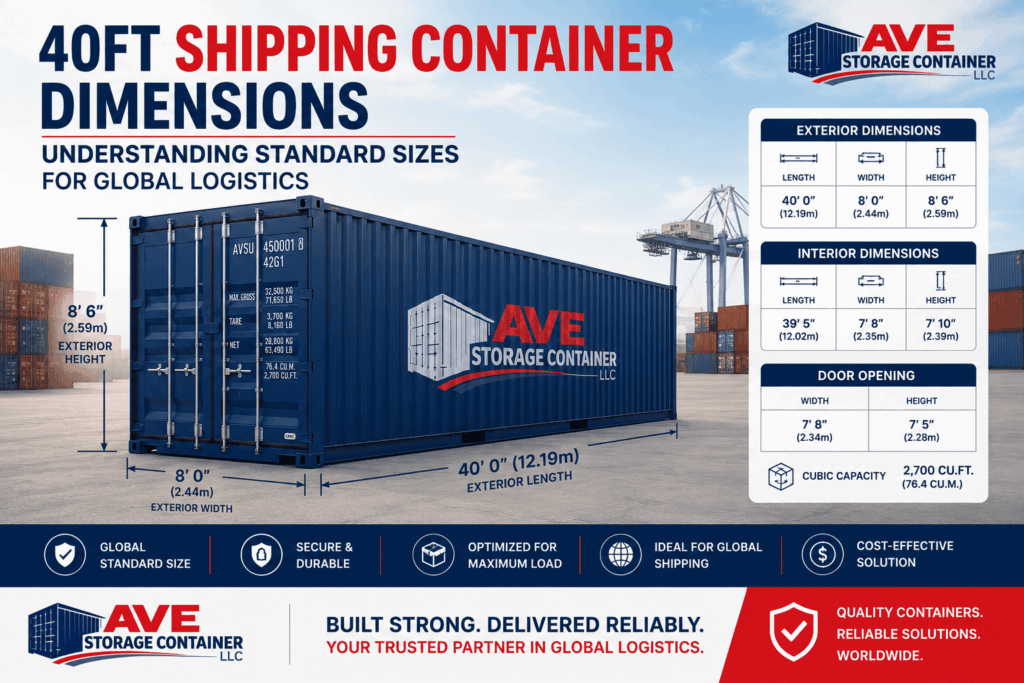
40ft Shipping Container Dimensions are the cornerstone of modern intermodal transport, defining how goods move across oceans, rails, and roads. Knowing these measurements helps shippers, builders, and logistics planners optimize space, weight, and cost. This guide breaks down every critical size detail, from external length to internal volume, so you can make informed decisions for cargo, storage, or modular projects.
Key Takeaways
- Standard 40ft shipping container dimensions: 40 ft long, 8 ft wide, 8 ft 6 in high externally.
- Internal usable space: roughly 39.5 ft × 7.8 ft × 7.9 ft, yielding about 2,390 cu ft of volume.
- Door opening measures 7.8 ft wide × 7.5 ft high, facilitating easy loading of palletized goods.
- Maximum payload capacity averages 26,500 kg (58,400 lb) with a tare weight of ~3,700 kg.
- High‑cube variants add an extra foot of height, increasing volume to ~2,690 cu ft.
40ft Shipping Container Dimensions
40ft Shipping Container Dimensions follow ISO 668 standards, ensuring uniformity worldwide. The external length is exactly 40 feet (12.192 meters), width is 8 feet (2.438 meters), and height is 8 feet 6 inches (2.591 meters). These numbers form the basis for stacking, chassis fitting, and port crane operations.
Furthermore, the internal dimensions subtract the wall thickness, typically yielding 39.5 feet length, 7.8 feet width, and 7.9 feet height. Consequently, the internal cubic capacity reaches approximately 2,390 cubic feet (67.7 cubic meters). This volume accommodates a wide range of palletized cargo, machinery, or bulk goods.
In addition, the door opening is a critical factor for loading efficiency. The standard door measures 7.8 feet wide and 7.5 feet high, allowing most euro‑pallets and industrial equipment to pass through without tilting. As a result, loading times are minimized at terminals and warehouses.
40ft Shipping Container Dimensions: Internal vs External Measurements
Understanding the difference between external and internal sizes helps avoid costly miscalculations. External dimensions dictate how containers fit on ships, trains, and trucks, while internal dimensions reveal the actual cargo‑holding space. The discrepancy arises from corrugated steel walls, floor cross members, and roof rails, which together consume roughly 6‑8 inches per dimension.
Moreover, the internal height is slightly less than the external height due to the floor thickness and roof profile. This reduction impacts the stacking of tall items; therefore, shippers often verify internal height before loading machinery or stacked pallets. Conversely, the external width remains unchanged for most containers, simplifying side‑lift operations.
Additionally, the internal length is reduced by the thickness of the front and rear end frames. This loss is minimal but becomes relevant when planning for very long items such as pipes or beams. Consequently, accurate internal length measurement ensures that cargo fits without protruding beyond the door seal.
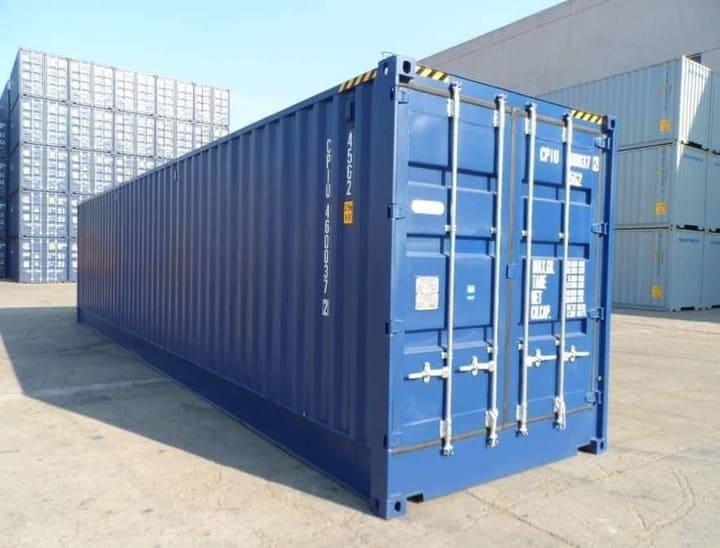
Standard External Dimensions
The external length of a 40ft container is fixed at 12.192 meters, which equals exactly 40 feet. This measurement is measured from the foremost point of the front end frame to the rearmost point of the rear end frame, including corner castings. International shipping lines rely on this uniformity to allocate slot space on vessel decks.
Furthermore, the external width is consistently 2.438 meters (8 feet) across all ISO containers, enabling seamless interlocking with twistlocks and chassis pins. This width also matches the standard railway gauge in many regions, facilitating double‑stack train operations without obstruction.
In addition, the external height stands at 2.591 meters (8 feet 6 inches) for a standard container. This height includes the corrugated roof panel and the floor underside clearance. Port cranes use this dimension to calculate safe lifting angles and stack height limits.
Internal Volume and Capacity
The internal length of a 40ft container measures about 12.03 meters (39.5 feet) after accounting for the 2.5‑inch thick end frames on each side. This results in a usable floor area of roughly 94.5 square feet (8.8 square meters). Consequently, shippers can layout pallets in rows of two or three depending on pallet size.
Furthermore, the internal width is approximately 2.35 meters (7.8 feet) due to the corrugated side walls. This width allows for the placement of standard euro‑pallets (1.2 m × 0.8 m) side by side with minimal gaps. As a result, maximizing pallet count becomes a straightforward calculation.
In addition, the internal height reaches about 2.39 meters (7.9 feet) after subtracting the floor thickness and roof profile. Multiplying length, width, and height yields a cubic capacity of approximately 67.7 cubic meters (2,390 cubic feet). This volume rating is essential for estimating how many boxes, drums, or bulk bags can be loaded.
Door Opening Specifications
The door opening width of a standard 40ft container is 2.34 meters (7.8 feet), measured between the inner edges of the door hinges. This clearance accommodates most pallet jacks and forklifts without requiring angled entry. Consequently, loading and unloading cycles are expedited at distribution centers.
Furthermore, the door opening height is 2.28 meters (7.5 feet) from the floor underside to the bottom of the door header. This height permits the passage of tall items such as machinery housings or stacked cartons. However, operators must verify cargo height to avoid contact with the door frame.
In addition, the doors are equipped with rubber gaskets and locking rods that maintain weather tightness when closed. Proper maintenance of these seals ensures that water, dust, and pests remain outside the container interior. As a result, cargo integrity is preserved during long voyages.
Weight and Payload Limits
The tare weight of an empty 40ft container typically ranges from 3,600 kg to 4,000 kg (7,900 lb to 8,800 lb), depending on the manufacturer and steel grade. This weight includes the frame, walls, floor, and doors but excludes any cargo or modifications. Knowing the tare weight is essential for calculating gross vehicle weight on trucks and trains.
Furthermore, the maximum gross weight (payload plus tare) for a 40ft container is generally set at 30,480 kg (67,200 lb) for standard dry containers, as defined by ISO 1496‑1. Subtracting the tare weight yields a maximum payload capacity of approximately 26,500 kg (58,400 lb). This limit ensures safe handling by port cranes and road transport.
In addition, high‑cube containers may have a slightly higher tare weight due to the extra steel in the taller walls, but their payload capacity remains similar. Consequently, shippers must consult the specific container’s CSC (Container Safety Convention) plate for exact weight ratings before loading.
High Cube 40ft Containers
High‑cube 40ft containers share the same length and width as standard units but increase the height to 9 feet 6 inches (2.896 meters). This extra foot of vertical space raises the internal volume to roughly 76.2 cubic meters (2,690 cubic feet). Consequently, high‑cube units are ideal for lightweight, bulky goods such as furniture, textiles, or foam products.
Furthermore, the internal height of a high‑cube container measures about 2.69 meters (8.8 feet) after accounting for wall and floor thickness. This added clearance allows for the stacking of taller pallets or the installation of interior shelving systems without hitting the roof. As a result, warehouse operators often prefer high‑cube containers for storage conversions.
In addition, the door opening height remains unchanged at 7.5 feet, meaning that the extra height is only accessible above the door header. Loading tall items still requires the door opening, but once inside, cargo can be stacked higher. Consequently, proper load planning is necessary to avoid exceeding the roof’s structural limits.
Common Uses and Applications
Standard 40ft containers dominate global shipping, transporting everything from electronics and apparel to machinery and raw materials. Their uniform dimensions enable seamless transfer between ship, rail, and truck, reducing handling time and costs. Consequently, they are the backbone of international trade logistics.
Furthermore, these containers are widely repurposed for modular construction, including offices, classrooms, pop‑up retail spaces, and emergency shelters. The steel frame provides structural strength, while the weather‑tight envelope protects occupants from the elements. As a result, architects and developers favor them for rapid, cost‑effective builds.
In addition, the container’s interior can be insulated, lined with plywood, or fitted with HVAC systems to create comfortable living or working environments. Consequently, many disaster‑relief organizations deploy 40ft units as temporary housing or medical clinics following natural disasters.
Modifications and Customizations
Common modifications include adding windows, doors, ventilation, electrical wiring, and plumbing to transform a shipping container into a habitable space. Cutting openings in the steel walls requires reinforcement with steel tubing or angles to maintain structural integrity. Consequently, professional fabricators follow engineering guidelines to ensure safety.
Furthermore, interior finishes such as spray‑on insulation, drywall, or plywood paneling improve thermal performance and aesthetics. Flooring upgrades may involve installing marine‑grade plywood, vinyl, or epoxy coatings to resist moisture and wear. As a result, modified containers can achieve energy efficiency comparable to traditional buildings.
In addition, exterior alterations like painting, cladding, or adding logos enhance branding and corrosion resistance. Applying a protective coating such as marine‑grade paint or zinc‑rich primer extends the container’s lifespan in harsh environments. Consequently, many businesses customized containers as mobile kiosks, ticket booths, or exhibition stands.
Buying Considerations
When purchasing a 40ft container, inspect the CSC plate for the latest safety certification and verify the container’s grade (e.g., cargo‑worthy, wind‑and‑watertight, or as‑is). A cargo‑worthy unit is suitable for international shipping, while wind‑and‑watertight containers are adequate for storage. Consequently, matching the grade to the intended use prevents future complications.
Furthermore, check for signs of rust, dents, or floor damage, especially near the corners and door seals. Surface rust can be treated, but extensive corrosion may compromise structural strength. As a result, a thorough visual inspection helps negotiate a fair price or request repairs before purchase.
In addition, consider the container’s history: whether it has been used for hazardous chemicals, food‑grade cargo, or refrigerated units. Containers that previously carried hazardous materials may require thorough cleaning or lining. Consequently, verifying the cargo history ensures compliance with health and safety regulations.
Maintenance and Longevity
Regular maintenance prolongs a container’s service life, whether it remains in active shipping or is repurposed for storage or construction. Key tasks include cleaning the interior, inspecting and lubricating door hinges, and checking the condition of the rubber gaskets. Consequently, preventive care reduces the risk of water ingress and corrosion.
Furthermore, repainting the exterior every two to three years with a suitable marine‑grade coating protects the steel from salt‑air oxidation. Spot‑treating rust spots with a rust converter and primer prevents further deterioration. As a result, the container retains its structural integrity and aesthetic appeal.
In addition, monitoring the floor condition is vital; replacing damaged plywood or applying a protective sealant guards against moisture from cargo or ground contact. Consequently, a well‑maintained 40ft container can remain functional for 20‑30 years or more, offering excellent return on investment.
Environmental Impact
Reusing shipping containers reduces the demand for new building materials, thereby lowering carbon emissions associated with steel production and concrete manufacturing. Each repurposed container diverts several tons of waste from landfills and decreases the energy required for new construction. Consequently, container‑based architecture is often praised for its sustainability benefits.
Furthermore, the modular nature of containers allows for easy disassembly and relocation, minimizing site disturbance and enabling adaptive reuse. This flexibility supports circular economy principles, where structures are designed for multiple lifecycles. As a result, developers increasingly incorporate containers into green building certifications such as LEED or BREEAM.
In addition, retrofitting containers with solar panels, rainwater harvesting systems, and energy‑efficient insulation enhances their environmental performance. Consequently, many off‑grid homes and eco‑resorts utilize containers as the core of sustainable living solutions.
Future Trends in Container Dimensions
While the 40ft length remains the industry standard, innovations such as 45ft and 48ft containers are gaining traction for specific trades that benefit from extra length without changing width or height. These longer units offer increased volume while still fitting within existing port infrastructure with minor adjustments. Consequently, shippers evaluate the trade‑off between added capacity and potential handling surcharges.
Furthermore, advancements in lightweight high‑tensile steel and composite materials aim to reduce tare weight while maintaining strength. Lighter containers increase payload capacity and improve fuel efficiency for trucks and ships. Consequently, ongoing research may lead to updated ISO specifications that reflect these material improvements.
In addition, smart container technology integrates IoT sensors for real‑time monitoring of temperature, humidity, shock, and location. These sensors do not alter external dimensions but add value by improving cargo visibility and reducing losses. Consequently, the future of 40ft containers lies not only in size but also in data‑driven intelligence.
Get Your Perfect Container Today
Ready to source a 40ft shipping container that meets your exact dimensions and specifications? Our expert team provides certified, cargo‑worthy units with flexible delivery options across the country. Click the button below to receive a free quote and start your project with confidence.
FAQs:
What are the exact external dimensions of a 40ft shipping container?
The external dimensions of a standard 40ft shipping container are 40 feet (12.192 meters) in length, 8 feet (2.438 meters) in width, and 8 feet 6 inches (2.591 meters) in height. These measurements are defined by ISO 668 and ensure global interoperability for shipping, rail, and truck transport.
How much internal volume does a 40ft container provide?
After accounting for wall thickness, a 40ft container offers approximately 39.5 feet length, 7.8 feet width, and 7.9 feet height internally. This yields a usable volume of about 2,390 cubic feet (67.7 cubic meters), suitable for palletized cargo, machinery, or bulk goods.
What is the maximum payload capacity of a 40ft container?
The maximum gross weight for a standard 40ft container is generally 30,480 kg (67,200 lb) according to ISO 1496‑1. Subtracting an average tare weight of 3,700 kg (8,150 lb) leaves a payload capacity of roughly 26,500 kg (58,400 lb). Always verify the specific container’s CSC plate for exact limits.
How does a high‑cube 40ft container differ from a standard one?
A high‑cube 40ft container retains the same length and width (40 ft × 8 ft) but increases the height to 9 feet 6 inches (2.896 meters). This extra foot raises the internal volume to about 2,690 cubic feet (76.2 cubic meters), making it ideal for lightweight, bulky items while keeping the door opening height unchanged at 7.5 feet.
Can a 40ft container be used for permanent housing?
Yes, with proper insulation, ventilation, electrical, and plumbing modifications, a 40ft container can be converted into a durable, comfortable dwelling. Many architects use containers for affordable housing, emergency shelters, or eco‑homes, provided local building codes are met and structural reinforcements are added where openings are cut.
What maintenance steps extend the life of a shipping container?
Regular maintenance includes cleaning the interior, inspecting and lubricating door hinges, checking and replacing door gaskets, spot‑treating rust, and repainting the exterior with marine‑grade coating every two to three years. Ensuring the floor remains dry and protected also prevents corrosion and prolongs service life.
Are there restrictions on modifying the doors of a 40ft container?
Modifying door openings requires cutting steel and reinforcing the surrounding frame to maintain structural integrity. Any alterations should follow engineering guidelines and may need re‑certification under the CSC if the container is to be used for shipping. For storage or construction, local regulations may apply, but reinforcement is still recommended.
How do 40ft container dimensions affect trucking regulations?
In most regions, a 40ft container on a chassis fits within standard legal width limits (8.5 feet) and height limits (13.5 feet) when loaded, allowing it to travel without special permits. However, weight limits vary; shippers must ensure the combined weight of tractor, trailer, container, and cargo does not exceed the jurisdiction’s gross vehicle weight rating.
What is the typical lifespan of a well‑maintained 40ft container?
With regular maintenance—such as rust treatment, repainting, and floor care—a 40ft container can remain serviceable for 20 to 30 years, whether used in active shipping or repurposed for storage or modular construction. Proper care significantly extends its usability beyond the initial shipping lifespan.
Do 40ft containers require a foundation when used as buildings?
While containers are structurally sound, placing them on a level, well‑drained foundation—such as concrete piers, gravel pads, or slab‑on‑grade—prevents moisture ingress and uneven settling. A proper foundation also facilitates utility connections and ensures compliance with local building codes for permanent structures.
Are there any upcoming changes to the standard 40ft container dimensions?
The ISO standard for 40ft containers (12.192 m × 2.438 m × 2.591 m) remains unchanged, as any modification would disrupt global logistics networks. However, industry discussions continue around longer containers (45ft, 48ft) and lighter materials, which may coexist with the current 40ft standard rather than replace it.
