Bed vs Crane Delivery: Which Shipping Container Delivery Method Do You Need?

When you are in the market for a reliable storage solution and find yourself purchasing a shipping container, understanding shipping container delivery methods is just as important as selecting the right unit size. Whether you need extra space for a job site, a residential storage unit, or materials for converting a shipping container into a workshop or tiny home, getting the heavy steel box safely onto your property requires careful planning.
If you are wondering how to get a shipping container delivered, you will quickly discover that logistics, site constraints, and equipment choices dictate how your unit arrives. At AVE Storage Container LLC, we help customers navigate these logistics daily. This comprehensive guide breaks down the core differences between tilt-bed and crane container delivery, helping you evaluate shipping container delivery service options, anticipate shipping container delivery cost, and ensure your site is ready for seamless container unloading.
Understanding Shipping Container Delivery Methods for Your Property
Evaluating the right shipping container delivery methods begins with a clear assessment of your drop-off location. Not all trucks and trailers operate the same way, and what works for a wide-open commercial yard might completely fail in a tight residential driveway.
When you explore how are shipping containers delivered, you will find that transport companies primarily rely on two major mechanical systems: tilt-bed trailers and specialized crane trucks (or side-loaders). Each system serves a distinct purpose, requires specific overhead clearances, and handles shipping container load distribution differently during transit and offloading. Knowing these mechanical differences prevents costly delays, canceled trips, or property damage.
Why Tilt-Bed Container Delivery is the Industry Standard
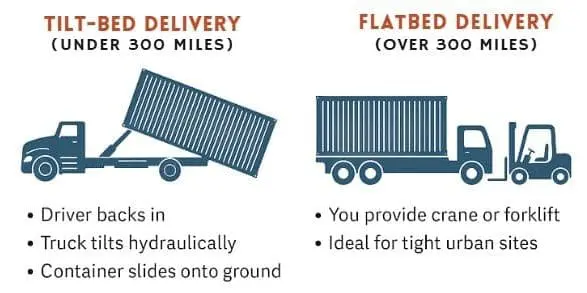
Tilt-bed container delivery stands as the most common and cost-effective method utilized across the United States. When you look into how to transport a shipping container, a tilt-bed trailer functions much like a standard rollback tow truck. The bed of the trailer hydraulically tilts upward, allowing the container to gently slide onto the ground as the truck slowly pulls forward.
This method is exceptionally straightforward, highly efficient, and forms the backbone of standard shipping container delivery service operations for both 20-foot and 40-foot units. Because fewer specialized operators are required compared to heavy crane lifting, tilt-bed transport usually keeps the overall shipping container delivery service cost at a minimum.
Exploring Crane Container Delivery for Challenging Locations
While tilt-beds are versatile, crane container delivery becomes essential when physical obstacles prevent a truck from backing straight into a drop zone. A crane truck—often equipped with a knuckle boom crane—lifts the steel box completely off the transport vehicle and places it precisely where you want it.
This method shines in tight urban environments, fenced yards, or properties with soft soil where a truck cannot safely drive. If you are researching types of shipping methods for heavy cargo or stationary placement, crane service offers unmatched vertical and horizontal placement precision. While the shipping container delivery cost for a crane setup is generally higher due to specialized equipment requirements, it solves impossible placement puzzles effortlessly.
How to Get a Shipping Container Delivered Safely and Efficiently
Mastering how to get a shipping container delivered requires coordinating three critical elements: your supplier, the transport driver, and your site preparation. When you secure a shipping container for sale USA, your logistics coordinator will ask detailed questions about your property layout, overhead power lines, surface grading, and gate widths. A successful delivery starts well before the truck arrives at your gate.
By establishing clear communication with your shipping container delivery service providers, you eliminate surprises on delivery day. Always verify whether your chosen supplier coordinates local ground placement or if you need to hire an independent local rigger for specialized positioning.
Breaking Down Shipping Container Delivery Cost Factors
Anticipating your total shipping container delivery cost helps you budget accurately when purchasing a shipping container. Several variables influence the final price tag on your invoice, including fuel prices, total mileage from the depot to your destination, permit fees, and the specific equipment required.
Standard tilt-bed deliveries priced within a reasonable radius are usually straightforward, whereas crane services, remote rural drops, or multi-stage transport configurations increase the investment. Always request an all-inclusive quote from your shipping container delivery service provider so you can compare apples-to-apples estimates without hidden fuel surcharges or unexpected wait-time fees.
Evaluating Container Unloading Dynamics: Tilt-Bed vs Crane
The physical mechanics of container unloading dictate how much space your delivery driver needs. With a tilt-bed truck, the vehicle needs a straight runway measuring roughly the length of your container plus the length of the truck—often up to 100 feet of clearance in a straight line.
As the truck pulls forward while lowering the bed, the container slides off vertically and horizontally at an angle. Conversely, a crane container delivery requires minimal forward and backward movement. The crane truck parks alongside or near the target zone, swings its boom, and lowers the box straight down. This makes crane unloading ideal for narrow alleys or established landscaping that you cannot afford to drive over.
What are Shipping Methods in the Context of Container Logistics?
People often wonder what are shipping methods when they hear terms like intermodal transport, rail freight, and final-mile trucking. In global logistics, containerization is a shipping method that revolutionized international commerce by standardizing cargo movement across ships, trains, and semi-trucks.
When shipping goods overseas, understanding the overseas container shipping process and the cargo container shipping process ensures your freight moves securely through international ports. However, when buying a stationary storage box for domestic use, your primary focus shifts to local final-mile transport, scheduling a shipping container delivery date, and choosing between tilt-bed and crane drop-offs.
Navigating the Shipping Container USA Market
The market for a shipping container USA wide has expanded dramatically, driven by residential storage needs, commercial expansions, and the booming popularity of converting a shipping container into modern architecture. When shopping for units, buyers frequently ask about container grading, distinguishing between wind-and-water-tight units, cargo-worthy boxes, and certified structures like a type b shipping container or a category b shipping container. Regardless of whether you are buying a brand-new “one-trip” unit or a refurbished grade-A box, securing a reliable shipping container delivery service usa network guarantees your investment arrives structurally sound and properly positioned.
Managing Shipping Container Load Distribution During Transit
Proper shipping container load distribution matters immensely—not only when loading cargo for international transit, but also when transporting an empty or partially loaded container on a truck. If you are moving a container that already contains heavy items, the center of gravity shifts, affecting how a tilt-bed trailer handles during braking and offloading. Professional drivers meticulously check weight distribution to prevent tipping or trailer destabilization.
If you are planning an independent move or coordinating complex shipping container pickup and delivery, always ensure heavy contents are properly secured and distributed evenly across the floorboards before the transport vehicle departs.
Finding Reliable Shipping Container Delivery Service Providers
Sourcing trustworthy shipping container delivery service providers saves you from logistical headaches and property damage. The best companies transparently explain their equipment capabilities, outline their site requirements in writing, and carry adequate liability insurance.
Whether you need a local drop in the United States or a cross-border haul requiring a shipping container delivery service canada connection, vetting your logistics partner ensures professional handling. Look for established reviews, clear communication channels, and drivers who possess extensive experience maneuvering heavy commercial transport rigs into tight residential or rural spaces.
Essential Site Preparation Tips for Your Container Drop
Preparing your property before your driver arrives ensures a smooth shipping container delivery experience. Both tilt-bed and crane deliveries require a stable, firm foundation such as gravel, concrete pads, or railway ties. If the ground is muddy or soft, heavy transport trucks can easily sink, halting the entire operation.
Furthermore, check for overhead obstructions like tree branches, telephone wires, and roof overhangs. Providing a clear, accessible path allows your shipping container delivery service crew to complete the placement quickly, safely, and without damaging your driveway or surrounding landscaping.
Planning Your Shipping Container Schedule and Booking Process
Executing a seamless container shipping booking process requires advance planning. High demand seasons often push out delivery windows, so securing your unit and transport date weeks in ahead is wise. Once you confirm your shipping container delivery date, make sure someone over the age of 18 is present on-site to direct the driver on exact placement coordinates. Clear communication regarding gate codes, dog restrictions, and neighborhood HOA guidelines prevents frustrating delays and ensures your box lands precisely where you envisioned it.
The Role of Cranes in Complex Residential Placements
For homeowners installing storage units in backyards behind fences or over retaining walls, tilt-bed trucks simply cannot reach the target zone. This is where crane container delivery proves indispensable.
By hoisting the container over fences, bushes, or swimming pools, a crane operator places the unit with surgical accuracy. This specialized approach eliminates the need to tear down fences or clear large swaths of trees, preserving your property’s aesthetic while still giving you the robust, secure storage space you require.
Why Tilt-Bed Trailers Are Perfect for Open Rural and Commercial Lots
If your property features wide-open acreage, a gravel construction yard, or a long, straight commercial driveway, tilt-bed container delivery is typically the optimal choice. It is faster, more mechanically straightforward, and considerably more affordable than hiring a crane truck.
The driver backs the truck into position, elevates the hydraulic bed, pulls forward, and your container slides smoothly onto your prepared gravel pad. For straightforward drops with ample clearance, tilt-bed transport remains the gold standard of container logistics.
Frequently Asked Questions (FAQs)
1. What is the main difference between tilt-bed and crane delivery?
Tilt-bed delivery uses a hydraulic trailer that tilts upward to slide the container off the back as the truck pulls forward, requiring a long, straight clearance path. Crane delivery uses a boom truck to lift the container entirely off the vehicle and place it vertically into tight or obstructed spaces.
2. How much space does a tilt-bed truck need to deliver a 20-foot container?
Generally, a tilt-bed truck delivering a 20-foot container requires approximately 60 to 80 feet of straight-line clearance in front of the drop zone to pull forward safely as the container slides off.
3. Can a tilt-bed truck place a container on soft dirt or mud?
It is strongly discouraged. Heavy transport trucks weigh many tons and can easily get stuck in soft soil, mud, or wet grass. A firm, compacted gravel or concrete pad is required.
4. When should I choose crane delivery over tilt-bed delivery?
You should choose crane delivery if your drop zone has overhead obstacles, narrow gates, fences, soft ground, or lacks the long straight-line clearance required for a tilt-bed truck to pull forward.
5. Does crane delivery cost more than tilt-bed delivery?
Yes, crane delivery typically incurs higher costs because it requires specialized heavy equipment (a crane truck) and specialized operators compared to a standard tilt-bed rollback trailer.
6. Do I need to prepare a foundation before my shipping container is delivered?
Yes. Placing a container directly on bare soil can cause it to sink, trap moisture underneath, and rust prematurely. A foundation of gravel, concrete blocks, or railroad ties is essential.
7. What overhead clearances should I check before delivery?
Check for low-hanging tree branches, telephone lines, electrical service drops, and roof overhangs. Tilt-bed trucks elevate their beds significantly during unloading, and cranes need vertical room to swing their booms.
8. How are shipping containers secured on a delivery truck?
Containers are securely locked to the transport trailer using twist-locks that fit directly into the container’s corner castings, ensuring zero shifting during transit.
9. Can a delivery driver place my container facing a specific direction (doors facing front or back)?
Yes, drivers can usually load the container onto the truck in the correct orientation so that the doors face whichever direction you prefer upon unloading, provided site geometry permits.
10. Are permits required for shipping container delivery?
Permit requirements vary entirely by local city, county, and zoning laws. In many rural areas, no permits are needed, while residential city zones may require placement permits. Always check local regulations.
11. What is the standard turnaround time after purchasing a shipping container?
Delivery windows typically range from 3 to 10 business days depending on geographic location, inventory availability, and transport scheduling loads.
12. How does shipping container load distribution affect delivery?
If your container is empty, it is lightweight and easy to tilt-off. If it contains cargo, the shifted center of gravity requires careful weight management by the driver to maintain trailer stability.
13. What should I do if my driveway is too narrow for a delivery truck?
If your driveway cannot accommodate the transport truck, you will need to arrange for a crane delivery that can park on the street and lift the container over obstacles, or place the container in an alternate accessible location.
14. Are shipping container delivery fees included in the purchase price?
Usually, delivery fees are quoted separately from the container purchase price because delivery costs fluctuate based on exact mileage and required equipment (tilt-bed vs. crane).
15. What happens if the driver arrives and cannot safely drop the container?
If safety hazards, soft ground, or tight clearances prevent a safe drop, the driver may have to abort the delivery. This often results in a dry-run fee, which is why precise site pre-checks are critical.
Conclusion
Choosing the right shipping container delivery methods ultimately depends on your specific property layout, budget, and placement goals. Whether you opt for the cost-effective efficiency of tilt-bed container delivery or the precision placement of crane container delivery, proper site preparation guarantees a smooth experience.
By understanding your shipping container delivery cost variables and coordinating closely with experienced professionals, you can secure a seamless drop-off for your new storage unit. Ready to find the ideal storage solution and schedule your drop? Explore our available inventory and reliable transport options today by visiting AVE Storage Container LLC.